What It Is
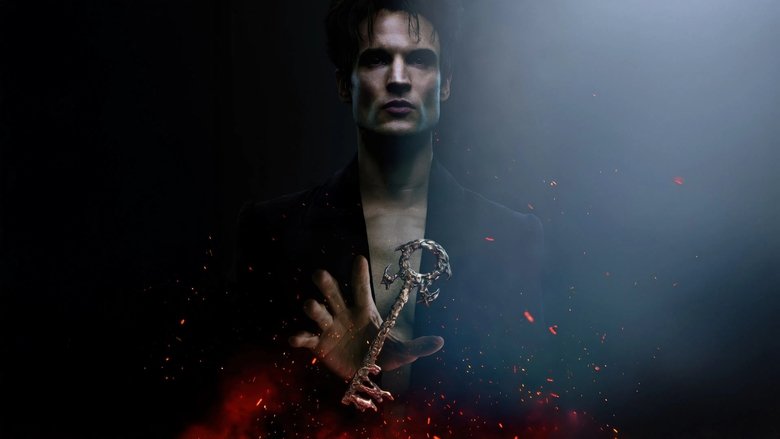
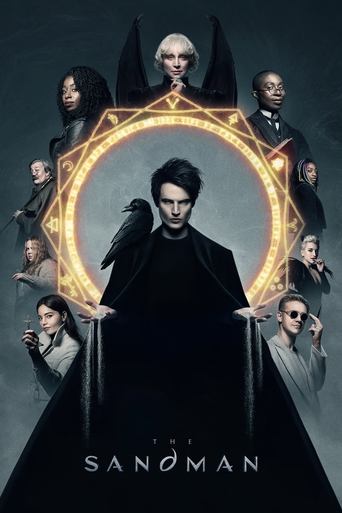
Netflix's adaptation of Neil Gaiman's DC/Vertigo comic, developed by Gaiman with David S. Goyer and showrunner Allan Heinberg. Tom Sturridge plays Dream, the pale, sad king of the Dreaming, who gets captured by an occultist in 1916 and has to spend the show reclaiming his kingdom and his tools. The early episodes are basically a jailbreak followed by a scavenger hunt: a helmet, a bag of sand, a ruby. Around Sturridge, the cast is stacked — Boyd Holbrook, Gwendoline Christie as Lucifer, Charles Dance, Jenna Coleman as Johanna Constantine, David Thewlis, Patton Oswalt voicing a raven, Kirby Howell-Baptiste as Death, Stephen Fry, Joely Richardson. It's an anthology-shaped fantasy pretending to be a serialized one.
What Works
The casting is the show's whole personality, and it's very good. Sturridge understood the assignment: he plays Dream as tired, imperious, and slightly ridiculous, which is exactly the trick the comic runs. Howell-Baptiste's Death is the best single scene in season one and honestly the best half-hour of the whole run. Christie's Lucifer is a full recalibration of what that character can be onscreen. The production design is genuinely lovely — the Dreaming looks like an old book somebody spilled candle wax on, and the show can hold a mood for forty minutes without cutting away for a joke. When it goes weird (a diner episode, a convention episode, a hell sequence) it's doing things nothing else on Netflix is trying.
The Argument Against
It's slow, and not always the good kind. The first-season quest structure is a delivery mechanism for vibes, and the middle episodes drag when you can feel the writers respecting the source page-by-page instead of adapting it. Heinberg's scripts are reverent to a fault; the show explains itself out loud a lot, especially when Dream monologues about rules and realms. Ornate can tip into inert. If you don't already care about the mythology, you'll spend a couple of hours waiting for the show to earn your patience. Season two is split into halves and rushes through material the first year would have savored, which is its own kind of frustrating.
The Right Viewer
People who liked Good Omens, American Gods on its better days, or the calmer, more melancholy stretches of Interview with the Vampire. If your idea of a great fantasy hour is a long conversation in a strange room, you're the target. If you're wired for The Boys or House of the Dragon and want propulsive plot every episode, you'll bounce by hour two. Fans of the comic will forgive a lot. Newcomers should give it three episodes, not one.
Final Word
WORTH IT because the craft holds up its side even when the pacing doesn't. The performances, the design, the willingness to sit inside a mood — all real, all rare. It isn't a masterpiece and it never quite finds a shape that beats the comic, but it's ambitious grown-up fantasy made by people who care, and it actually got to end on its own terms, which almost nothing does. On the lecture question: Gaiman's themes about story, identity, and mercy are baked into the drama rather than announced at it. The show has a worldview and lets characters live inside it. That's what a good adaptation looks like, even when it's uneven.