In this piece · 10 sections+

Yes. Silo is worth watching if you have patience for slow-burn dystopian sci-fi with mystery-box bones and genuinely good performances.
It's one of the few shows Apple TV spent real money on that doesn't feel like it was made by a wellness app. Four seasons deep, 8.2 on TMDb, Rebecca Ferguson actually acting instead of just standing in a windbreaker. If you liked the first season of Fallout, the mood of Severance, or anything where the walls are the villain, you're going to be fine here. If you need a show to start sprinting in episode one, you are going to hate it, and that's a you problem, not a Silo problem.
The quick verdict
Watch it. Silo is one of the best straight-ahead sci-fi shows running right now, which is a low bar in 2026 but it clears it with room. It's for people who liked the quieter stretches of Lost, who tolerated the first half of Foundation, who think a show earning its reveals is more fun than a show spraying them at you in the pilot. If you only watch shows where someone gets punched in the first ten minutes, keep walking.
What Silo is actually about
Ten thousand people live in a giant concrete tube buried in the ground. Nobody's allowed to ask why. The air outside is poison, or at least that's what they tell you, and the one punishment for wanting to go check is that they send you out there to clean the camera lens with a rag, and you die. That's the setup. The whole show is people inside a sealed system slowly figuring out that the system is lying to them.
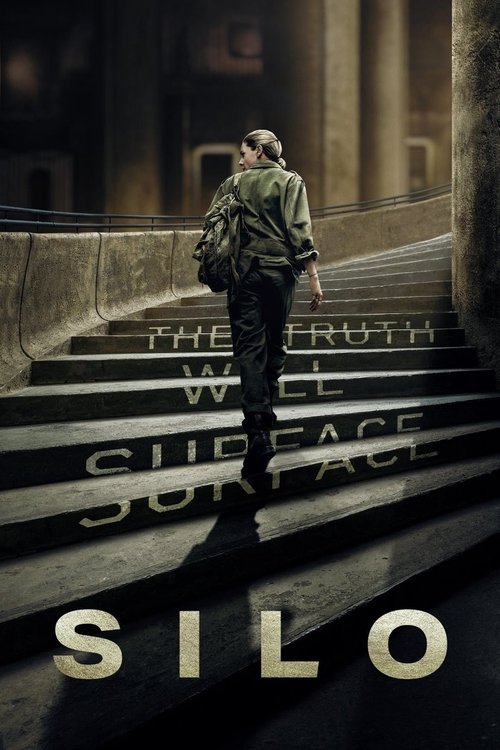
Tonally, it's grimy and quiet. There's no CGI space battle coming. The silo is a mix of brutalist bunker, Soviet apartment block, and an IKEA with worse lighting, and the camera lives in it like a character. Juliette, played by Rebecca Ferguson, is a mechanical engineer who gets dragged into the mystery after the sheriff breaks the one rule nobody breaks. She is not quippy. She does not have a plucky sidekick. She fixes generators and looks tired, and it rules.
The math on time
Four seasons, 31 episodes, roughly 50 to 60 minutes each. Call it 28 to 30 hours. That's a long weekend if you're a sicko, three solid weeks if you're a human with a job.
Is that worth it? Yeah. The show doesn't pad. Apple keeps its seasons to ten episodes max, which means no filler hour about a guy who collects stamps. Every episode moves the mystery forward or deepens a character you'll actually remember by the finale. Compare that to any 23-episode network drama where half the season is a bottle episode in a hospital waiting room and you'll feel like Silo respects your Sunday.
What it gets right
The production design is doing the heaviest lifting on television right now. The silo feels real. The stairs are the stairs — there's one spiral staircase that runs the full 144 floors, and the show makes you feel every step of it. Characters age walking from one plot point to another. You start to understand the geography the way you understand your childhood house. That's not vibes. That's deliberate blocking and a crew that gave a damn.
Rebecca Ferguson is the engine. She plays Juliette with this coiled, exhausted competence that most prestige dramas try to fake with voiceover. She doesn't explain her feelings. She fixes something, looks at a wall, and you know. Common, Tim Robbins, David Oyelowo, Rashida Jones in the pilot — the cast is dense with people who've done real work elsewhere, and nobody is slumming. Tim Robbins in particular turns in a performance as the silo's IT chief that should've gotten more awards attention than it did, but Apple is bad at campaigning for anything that isn't Ted Lasso.
The writing trusts you. Graham Yost (Justified, The Americans, Slow Horses) runs the room, and it shows in the pacing. The show drops information in the corner of a frame and lets you decide whether to pick it up. There are no monologues where a character stops and explains the premise to you like you're six. The mystery compounds instead of resetting every week. By the end of season two you'll realize you've been handed about forty puzzle pieces without noticing.
What doesn't work
It is slow. Not Severance-slow where every scene is a short film, but slow in the sense that episode one is almost entirely setup for an inciting incident that most shows would've gotten to in a cold open. If you bounced off the first episode, you're not crazy. The pilot is the weakest hour of the series by a wide margin. It uses a framing device that the show basically abandons after, and it introduces a character you think is the lead who is not the lead. Push through. It is intentional and the payoff starts in episode two.
Season one takes maybe four episodes to really grab. Season two is sharper top to bottom but spends time in a secondary location that some viewers found a drag. Season three is where the show gets ambitious and some of the ambition lands and some wobbles. The exposition load gets heavy in stretches when the lore starts getting answered, and there's a point in season three where a character basically sits down and explains the backstory for twenty minutes. It's not quite a crime, but you'll feel the show straining to catch you up because the books it's based on have more backstory than the TV format can carry.
The other honest knock: it's a mystery-box show, and mystery boxes live or die on the landing. Season four is airing now and the showrunners have said they know where it ends, which is more than Lost ever managed to say. We'll find out. For now, every answer the show has delivered has felt earned, which puts it ahead of about ninety percent of the genre. The books it's based on (Hugh Howey's Silo trilogy on Amazon) have a complete ending, so there's a map. The question is just whether the show follows it or wanders.
Who should watch it
If you liked Fallout on Prime Video, yes. Same bones — a sealed society, a reluctant woman protagonist, buried lies — just grimmer and less jokey. If you liked Severance, yes. The institutional-dread muscle is the same, even if Silo is more plot-forward and less surreal. If you liked the first season of Westworld before it ate itself, yes. If you liked Station Eleven for the quiet post-apocalypse hum, you'll find a home here.
If you bounced off Foundation because it was too dry, maybe. Silo is warmer than Foundation because the stakes are a specific person in a specific place, not a galactic empire you can't picture. If you bounced off Lost because the mystery never resolved, I get it, but Silo is on a shorter leash — the source material has a finish line.
Skip it if you need action every episode. Skip it if you can't do dim lighting. Skip it if a show has to have a love triangle to keep you interested. There's romance in Silo but it's not the point and it's handled like adults handle it, which some people find boring and I find a relief.
Where to watch
Apple TV+ exclusive, all four seasons. You cannot rent it, you cannot buy it, you have to sign up for Apple's streamer. Apple runs frequent seven-day free trials and routinely throws promo months at anyone who looks at the signup page sideways. If you've got an iPhone bought in the last couple of years, check your settings — you might already have three free months you didn't know about.
For American audiences there's no legal workaround. For everyone else, Apple TV+ is in basically every country and the show is on all of them.
FAQ
Is Silo overrated?
No. If anything it's underrated because Apple does a bad job marketing anything that isn't a comedy. The 8.2 TMDb score tracks with how most viewers actually feel after finishing a season. It's not Breaking Bad, it's not The Wire, but it's the best pure sci-fi drama in the current streaming cycle and the praise is earned, not pumped.
Does it get better after season 1?
Yes. Season two is more confident, better paced, and expands the world without losing the claustrophobia. Season three is more ambitious and uneven in places, but the highs are higher. If you're on the fence after the pilot, give it until the end of episode three of season one. If you're not hooked by then, Silo isn't going to convert you.
Is it too slow?
It's slow. It's not Mare of Easttown slow or Dark slow, but it's a show that lets scenes breathe. The pacing is a feature, not a bug — the whole point is that the silo feels like a trap, and a trap feels like a trap because time stretches inside it. If you're watching on your phone on the train, you'll probably miss what the show is doing.
Should I read the books first?
No. Watch the show, then read the books if you want more. The TV version makes smart choices about what to compress and what to invent, and knowing the ending beats will blunt the mystery. The books are good — Hugh Howey self-published them before it was cool and they still hold up — but they're a complement, not a prerequisite.
Will there be a season 5?
No. Apple and the showrunners confirmed Silo ends with season four. That's actually a plus — the whole show has been designed with an endpoint, and knowing the finale is coming turns every reveal in the current season into something load-bearing. A finite show that knows it's finite is a rare thing in 2026.
The bottom line
Watch the pilot. If you're not sure, give it through episode three of season one — that's where it clicks for most people. If it clicks, you've got about thirty hours of real sci-fi ahead of you, and Apple is paying for it so you don't have to.
✅ WORTH IT
Related guides
- The Best Rainy Day Shows to Watch When You're Sick, Sad, or Just Hiding From Your Life
- Shows Like Severance: 11 Eerie, Brain-Scrambling Picks That Actually Deliver
- The Best Background Shows to Have On When You're Sick, Sad, or Just Rotting
- The Best Shows to Watch With Friends When Everyone's on Their Phone Anyway
- Where to Watch Severance (2026)
Some links above are affiliate links (we're an Amazon Associate) — if you buy through them we may earn a commission. It never changes a verdict.